After years of infertility, failed tests, and tears I learned to hide, I finally saw two pink lines. My husband, Owen, woke to find me holding the test, and we cried together — we’d spent years reaching that moment through blood tests, medication schedules, and painful appointments.
Through all of it, there had been Evelyn — Owen’s mother.
Six Years of Quiet Cruelty
Evelyn never blamed me outright when Owen was around; she was smarter than that. Her comments arrived disguised as concern: “Some women are simply more naturally suited to motherhood than others,” she said once at Thanksgiving. At another dinner: “Owen always wanted children. It must be very hard for him.” When I pointed out it was hard for both of us, she smoothed it over — “Of course, Katie. That is what I meant.”
Once, with Owen out of the room, she leaned in and asked whether I’d considered that “holding on to him” might be selfish. When I told Owen, he confronted her; she cried, insisted I’d misunderstood, and simply got more careful about timing after that.
Her worst comment came at a family baby shower, cornering me in the kitchen: “There are women who accept when something is broken.” Her eyes dropped to my stomach.
I tried to let it go, for Owen’s sake. But every comment found somewhere to stay.
Twelve Weeks of Privacy
When we found out I was pregnant, I asked Owen to wait before telling his family — I wanted the news to belong to us first. We kept it to ourselves for twelve weeks, through appointments and ultrasounds and the sound of our baby’s heartbeat.
“My mother is going to lose her mind,” Owen said one evening.
“That’s what worries me,” I told him. “This baby is ours. Not hers.”
After the Announcement
Once we told the family, Evelyn immediately acted as though she were the one expecting — calling daily, sending nursery furniture links, announcing she’d set up her own nursery at her house. At Sunday dinner, she put her hand on my stomach unasked and declared she hoped for a boy, “because this family needs an heir.” When Owen’s sister Tessa pointed out this wasn’t a medieval kingdom, Evelyn insisted it was about “our bloodline, our traditions.”
“My baby is not an heir,” I told her, removing her hand. “He or she is a child.”
When we planned a small backyard gender reveal, Evelyn tried to take it over entirely — ordering decorations, hiring a photographer, inviting relatives I barely knew. When I objected, she turned to Owen with tears in her eyes: “I suppose my excitement is a burden now.” Then, more tellingly: “I waited years for this too” — as if my pregnancy partly belonged to her because she’d spent years judging me for not producing it sooner.
The morning of the reveal, I asked Owen for one thing: “If your mother makes this about her, stop her. Don’t tell me she’s just excited.”
“I won’t,” he said.
The Reveal
Nearly thirty people gathered in our backyard. Evelyn arrived in pale blue — “so much for neutrality,” Tessa muttered — and announced with total confidence that she already knew it was a boy.
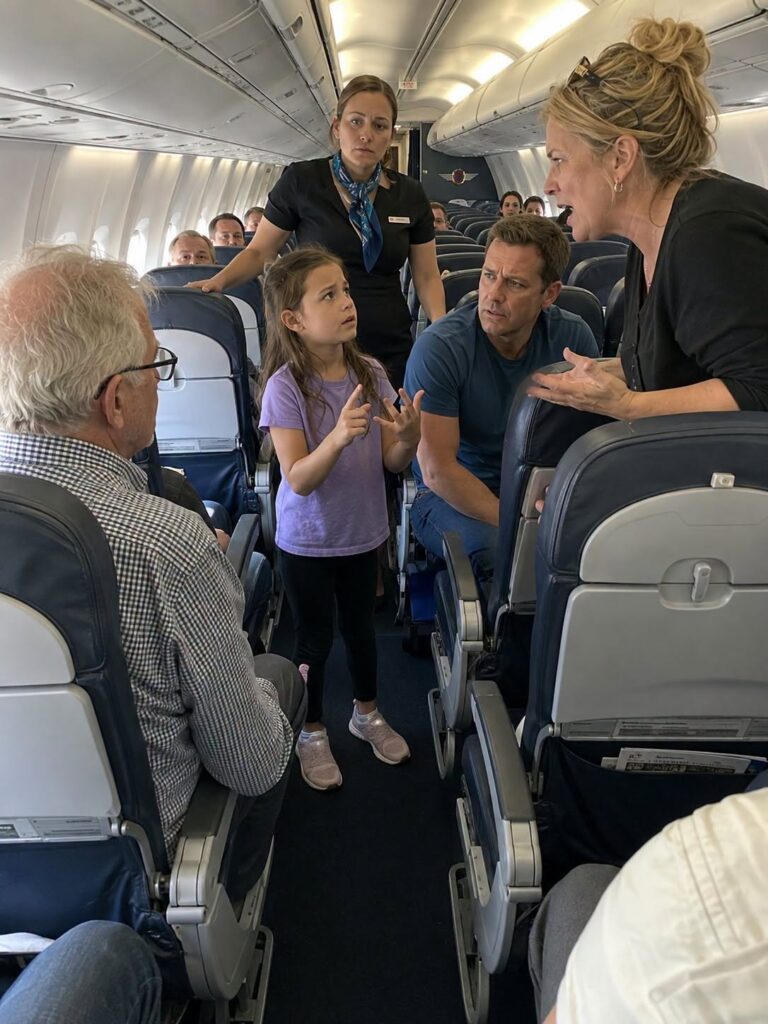
When the cannon fired blue powder into the air and Owen shouted, “We’re having a boy!”, Evelyn shoved past me to get to him first, her shoulder striking my ribs hard enough to make me stumble. She threw her arms around Owen, sobbing: “My boy is having a boy! My son’s heir! The sacred family legacy will continue!”
Everyone cheered. Cameras kept rolling. I stood alone under the falling confetti, holding my side, watching her smirk at me over Owen’s shoulder.
Tessa noticed first. “Katie? Are you okay?”
When Owen saw me holding my ribs, his smile vanished. “What happened?”
“She’s probably just overwhelmed,” Evelyn said breezily. “It’s not every day a woman learns she’s carrying the heir to an entire family legacy.”
“You shoved her,” Tessa said flatly.
“Apologize,” Owen told his mother. “For shoving my pregnant wife.”
Evelyn, flustered now with people actually watching, doubled down instead: “I waited years for this moment. I worried our family line would end with you. This baby will carry on the pure family bloodline.”
The cheering stopped. Tessa crossed her arms: “That sounds ridiculous.”
What I Said
I could have corrected her publicly right then. Instead, because Owen and I had agreed the details of our son’s conception belonged to us, I walked toward her with a pleasant expression. She opened her arms, expecting reconciliation, and several guests began clapping, assuming we were making up.
I hugged her — and leaned in close.
“Your son is sterile,” I whispered.
Four words. Her body went rigid.
It was true: after months of testing, Owen and I had learned he was sterile and had chosen an anonymous donor. Our son was wanted and loved and completely ours — just not the genetic continuation of Evelyn’s bloodline.
“Are you all right?” I asked her aloud, evenly.
She went pale, spilled a glass of water reaching for it with a shaking hand, and didn’t say the words “bloodline,” “heir,” or “legacy” again for the rest of the party. She stopped touching my stomach. She stood at the edge of every photo after that, stiff and silent.
After the Party
Once the guests were gone, Owen confronted her directly. She asked if I’d told him what I’d said.
“He already knows,” I said. “It’s his medical information.”
“But the baby—” Evelyn started.
“Is my son,” Owen said. “Biologically or not, that doesn’t make him less mine.”
He laid out the rest plainly: she’d shoved me, spent years blaming me for something that was never my fault, even suggested once that I should leave so he could have children with someone else. Tessa, hearing this for the first time, was stunned that the years of pointed comments had been based on nothing at all.
“You will not speak to Katie that way again,” Owen told his mother. “You will not treat our son as a symbol of your family name. Whether you have a relationship with him depends entirely on how you treat his mother.”
Evelyn had nothing clever left to say. She left in tears — real ones, this time.
“I should have stopped this years ago,” Owen told me afterward.
“You stopped it today,” I said.
Tessa, gathering up the last of the party’s mess, offered the line I’ve thought about since: “Your son already has the only legacy he needs — parents who fought hard to bring him into the world.”