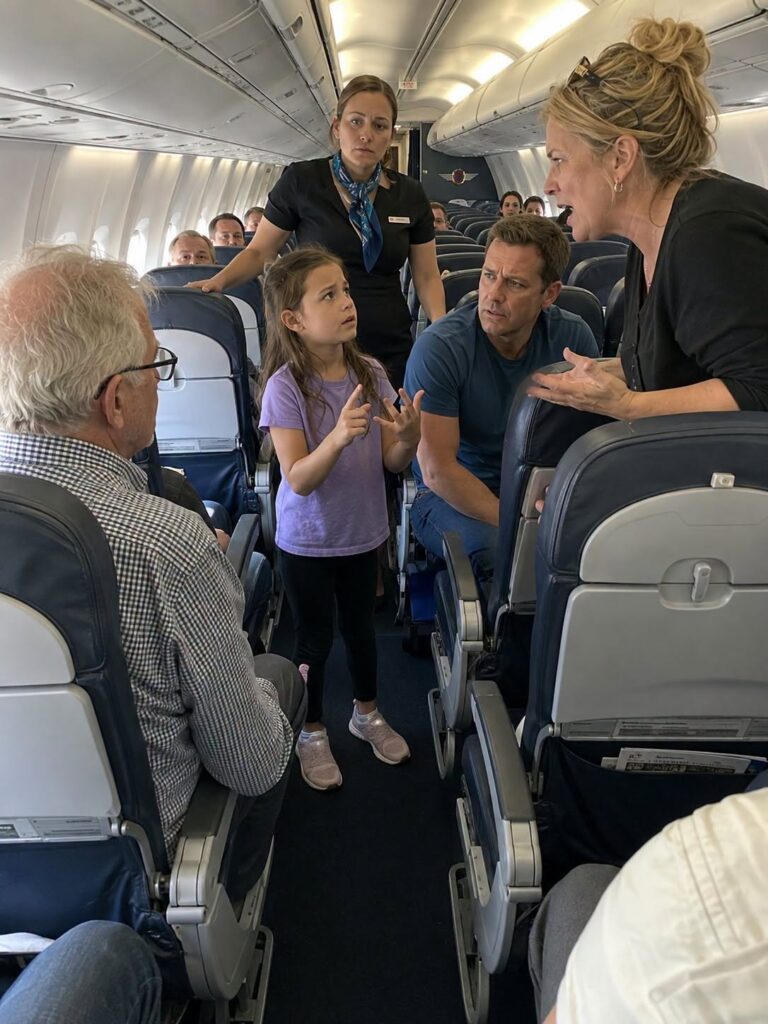
My parents told me they were taking my grandmother to lunch on a Tuesday afternoon, and three hours later, I got a call from a memory care facility asking if I could come help settle her in for her first night.
I want to be clear from the start that this wasn’t a secret plan my parents had executed behind my grandmother’s back. The move had actually been discussed with her directly, multiple times, over the preceding two months, ever since a series of incidents — a stove left on twice, a confused wandering episode that ended with a concerned neighbor walking her home, a fall that thankfully resulted in only bruising rather than something worse — had made it clear that living alone was no longer safe for her, regardless of how much she wanted to stay in the house she’d lived in for forty years.
My grandmother, June, had agreed to the move in principle during those earlier conversations, in the reasonable, clear-headed way she still managed on her better days. What none of us had fully accounted for was how her mild cognitive impairment affected her ability to retain that agreement between conversations — she’d say yes clearly, with real understanding in the moment, and then genuinely not remember having agreed to anything at all by the next week, sometimes by the next day.
That gap — between what she agreed to in any given conversation and what she actually retained afterward — was the thing my parents hadn’t fully reckoned with when they told her, that Tuesday morning, that they were taking her to lunch before the actual move-in appointment scheduled for that afternoon.
I got the call from the facility’s admissions coordinator, not my parents, which was its own red flag — my parents, it turned out, were in the parking lot, both of them, having what the coordinator diplomatically called “a difficult moment” that they needed a few minutes to work through before either of them could actually update me directly.
I drove over immediately, arriving to find my grandmother sitting in a small sunroom off the main lobby, calm on the surface but with a quality of confusion in her expression that told me she genuinely didn’t understand why she was there, despite — as I learned later — an entirely reasonable conversation about the move having happened with her just four days earlier, one she’d apparently retained almost nothing of by the time she woke up that Tuesday morning.
My parents, when I found them, were shaken in a way I hadn’t seen from either of them before. My mother had been crying. My father looked like a man who’d just watched something he thought he understood turn out to be far more complicated than he’d prepared for.
“She kept asking why we lied to her,” my mother said. “We didn’t lie. We told her Sunday exactly what today was going to be. She just doesn’t remember agreeing to any of it, and explaining that to her in the moment just made her more confused and more upset, not less.”
This, I came to understand over the following days, was the actual problem — not deception, but a well-intentioned plan that hadn’t accounted for how a genuine, repeated conversation could still land as a total surprise, even a betrayal, from my grandmother’s perspective, simply because her memory couldn’t hold onto agreements the way ours could.
We brought in a geriatric care specialist the following week, partly to help my grandmother settle into the transition, partly because all three of us — my parents and I — recognized we’d handled something delicate without enough actual expertise, relying instead on good intentions and a plan that made sense from our side of the memory gap but hadn’t been built with enough scaffolding for hers.
What the specialist helped us understand was that transitions like this, for someone with June’s specific cognitive profile, often go better with repeated, simple, low-stakes reminders close to the actual moment of transition, rather than a single clear conversation days in advance that the person may not retain. We’d done the ethical part right — genuinely including her in the decision, respecting her voice rather than making the choice unilaterally — but the practical execution hadn’t accounted for the reality of her memory limitations, leaving her blindsided in the moment despite having agreed clearly days earlier.
The facility, to their credit, had experience with exactly this kind of situation and helped orient her gently over the following days, with my parents and me visiting daily during the initial transition rather than the gradual step-down visiting schedule we’d originally planned. My grandmother’s confusion and hurt in that first week were real and didn’t fully resolve overnight, but they did ease, gradually, as the specialist had told us to expect, once the environment itself became familiar rather than newly disorienting each morning.
Six months later, June is settled in a way that would have been hard to imagine during that first difficult afternoon. She has a genuine routine, friends among the other residents, staff who know her specific needs and preferences well. On her clearer days, she tells us she’s glad she’s somewhere safe, an assessment I don’t think she’d have been capable of making, or trusting, in that first confused week.
What I took from the whole experience wasn’t a lesson about deception, because there wasn’t any. It was a harder lesson about the gap between doing something the right way in principle — genuinely including someone in a decision about their own life — and doing it in a way that actually works for their specific cognitive reality, which sometimes requires more expert guidance than good family intentions alone can provide.
We got the ethics right and the execution wrong, and both parts, it turned out, mattered enormously to how that Tuesday actually unfolded for my grandmother. I’m glad we eventually got expert help to bridge that gap, rather than assuming good intentions alone would be enough to carry her through a transition her own memory couldn’t hold onto without more careful support than we initially knew how to provide.