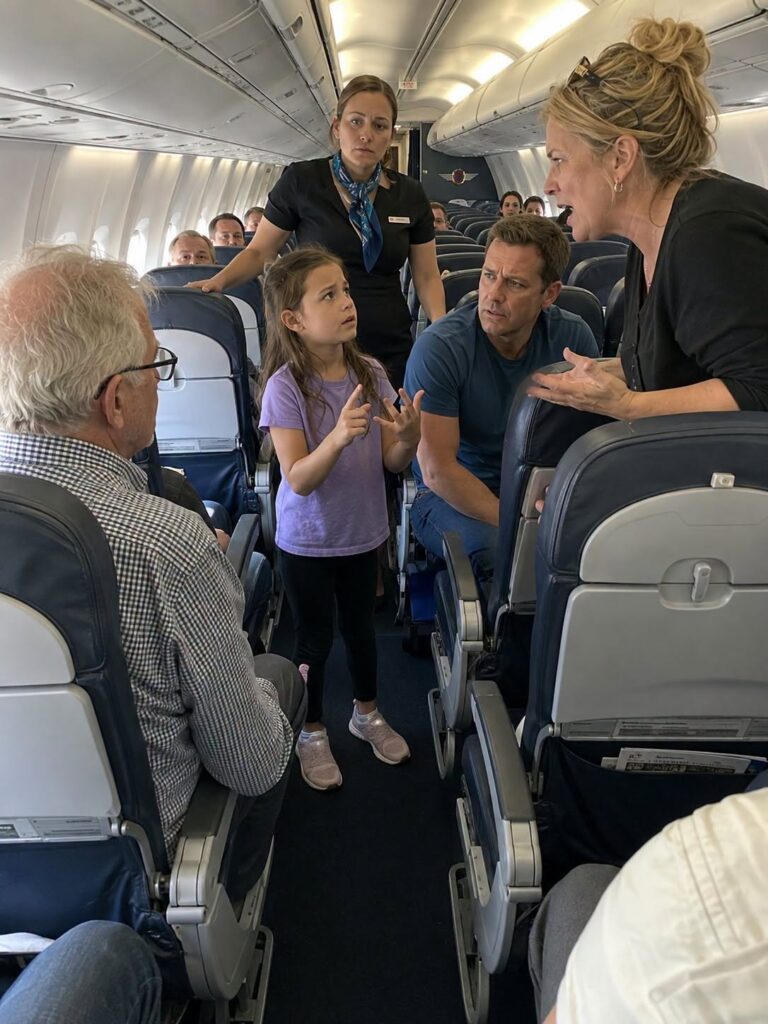
“I’d rather he didn’t walk you down the aisle.”
I set my fork down slowly, as if the table were made of glass.
My future mother-in-law, Patricia, sat across from me at her long oak table. She had made pot roast and set out the good china and folded the napkins into fans. Her hands were folded beside her plate, and she looked perfectly calm.
“He’s welcome to come,” she said. “Take one photo with him by the cars. But if he walks you, he’s in every picture. The album. Whatever hangs over your fireplace. People will look at him and not at you.”
“Mom,” Daniel began.
She kept her eyes on me. “It won’t be the wedding you imagine.”
Her son sat right there, seven weeks from marrying me. I had six replies lined up in my throat. Under the table, Daniel took my hand and squeezed once.
“We’ll figure something out,” he said. To her, not to me.
You need to know about my brother to understand how we got to that table.
Nathan
Nathan is thirty-one and has Down syndrome. He works four mornings a week at a bakery called Crumb & Co., where the owner says he makes every customer feel like they’ve walked into their grandmother’s kitchen. He loves superhero movies, peanut butter on celery, and a strawberry soda sold at only one gas station in town. He knows the batting average of every Cincinnati Reds player since 1990. He is the most honest person I know.
He was also our dad’s best friend. Dad was a mail carrier, and for eleven years Nathan rode along on Saturdays in the passenger seat of the little white truck. He knew every dog on the route by name. On Sundays Dad made pancakes and Nathan flipped them, and they argued weekly over whether chocolate chips count as breakfast. They had a forty-five-second handshake with sound effects.
Eleven months before the wedding, Dad had a stroke in the backyard. Nathan found him. In the ICU waiting room he sat for two days and wouldn’t eat. When Dad died, Nathan stood at the front of the church, though no one had asked him to. “My dad was my best friend,” he said. “I don’t know how to be a team by myself.”
After that, I couldn’t say the word “Dad.” My throat closed around it. When the wedding planner asked who would walk me down the aisle, I said, “Nobody. I’ll go alone,” and then sat in my car for twenty minutes.
Then, one Tuesday at dinner with both our families, Nathan kept starting sentences and stopping. At last he said, “Can I do Dad’s job? At the wedding.”
He had heard me. And this was his answer.
“Dad showed me,” he said. “In the summer, when you were at the store. He said, ‘Nate, help me practice.’ I was the girl. You hold the arm like this. You go slow, slower than regular walking. You don’t step on the dress.”
Mom made a sound like she’d been struck. Dad had practiced. I nodded until my neck hurt.
“Okay,” Nathan said, smiling. “I’ll wear Dad’s tie.”
Patricia said nothing all evening except, “This lasagna is lovely.”
The Plan
In the car after the pot roast dinner, I asked Daniel why he’d said what he said.
“Because I’ve watched her my whole life,” he said. “If we argue, she digs in. She’d call every relative. By the wedding, half the family would think you’d humiliated her.” He turned to me. “Nathan is walking you. That was never a question. I just have to work out how to do it without losing my mom. She’s all I have left.”
I believed him. But I knew whatever he came up with would be careful, polite, and a compromise, and I didn’t want one. At three in the morning, scrolling through photos of Dad and Nathan asleep on the couch with their mouths open the same way, I decided what to do. It had nothing to do with arguing.
I called our photographer, Imani. “Make him the best part of every picture he’s in,” I said. “Not the side of it. The center.”
“Done,” she said. “You know what twelve years of weddings taught me? A camera doesn’t show what people look like. It shows what they are. Whatever’s in a person tends to come out.”
Meanwhile Patricia phoned three times with suggestions. Her cousin’s husband could walk me. Walking alone was very modern. And wouldn’t all those people staring be overwhelming for “someone like him”?
“I’ll think about it,” I said each time.
Every Sunday, Nathan and I rehearsed in Mom’s living room, to the Beatles song my parents walked out to in 1989. He wore Dad’s black dress shoes, size eleven, with socks stuffed in the toes. On the third Sunday he stopped halfway across the carpet and took out Dad’s stopped pocket watch, frozen at 3:47.
“Dad said when he walks you, he’ll stop in the middle and say something,” Nathan told me. “It’s a secret. For the real day.”
Robbie
At my bridal shower, Patricia looked away when Nathan came down for a cupcake. Just a little. Her elderly cousin Ruthie noticed too, and afterward she sat beside me on the porch.
“Did she ever tell you about Robbie?” she asked. “Her little brother.”
Patricia was six when he was born, in 1962, with Down syndrome. Her parents were told to send him to a state institution, and they did, when he was eleven days old. They never spoke of him again. Patricia had held him and sung to him, and then he was simply gone.
“Her mother took the family photos out of the albums,” Ruthie said, “and cut him out with scissors. Little empty holes. Then she put them back as if nothing had happened.”
Robbie died at the institution at thirty-eight, in a grave marked only with a number.
“I don’t think what Patricia feels about your brother is hatred,” Ruthie said quietly. “I think it’s the scissors. I think she’s been cutting people out of pictures since she was six, because it’s the only thing anyone ever taught her.” She touched my hand. “Don’t let her cut him out.”
Ruthie’s mother had secretly kept copies of the photographs. A week later a shoebox of old negatives arrived in the mail with a note: Do what you think is right. Imani held the strips to her light table. There was a little girl with pigtails in a hospital chair, holding a baby.
“Can you print these?” I asked.
“Yes,” Imani said softly.
The Wedding
The morning of the wedding, Nathan came into the bride’s room in Dad’s suit and tie, his face wrong.
“Daniel’s mom talked to me,” he said. “She said it’s okay if I don’t want to do it. She said you might be embarrassed if I mess up, but you’re too nice to say.” His lip shook. “Am I going to embarrass you?”
I had never been so angry. But I knelt in my dress on the wooden floor and took his hands.
“You stood up at Dad’s funeral and said you didn’t know how to be a team by yourself. Neither do I. I’ve been trying for eleven months. You’re the only thing that will get me down that aisle. You’re my team.”
“Promise?”
“Promise.”
He breathed out. “Okay. I’m a little scared.”
“Me too.”
“We can be a little scared together.”
My mother told Daniel what had happened. He found his mother and said, calmly and firmly, “You don’t get to cut him out. Not today, not ever. One more word to him and you can watch from the parking lot.”
The music began at four. The doors opened and two hundred people stood. Nathan’s arm went stiff under my hand.
“Like the living room,” I whispered. “Door to fireplace.”
We walked slowly, slower than regular walking. He watched the floor so he wouldn’t step on my dress. Halfway down, he stopped, and the whole chapel held its breath. He took out the watch, looked up at the stained glass, and said, “Dad. We’re here. Halfway. Like you said.”
Then he turned to me.
“He said, ‘Leah, this is the halfway point. Everything behind you is our house. Everything in front of you is your house. But you can always come back. The door’s never locked.'”
He tucked the watch into my bouquet among the white roses.
“Okay. Now we go the rest of the way.”
“Okay,” I said, and I said the word at last. “Let’s go. Dad’s watching.”
At the altar Nathan put my hand in Daniel’s and said quietly, “Take care of her. She’s my favorite. Dad said so too.” Then he sat in the front row beside Mom, in the seat marked Reserved: Dad, and set his Reds cap on the empty chair beside him.
At the reception he stood and gave a toast no one had asked for. “I always wanted a brother. Now I have one. You have to watch the Reds with me, and you have to like peanut butter on celery.” He raised his strawberry soda. “To my sister, my new brother, and my dad, who’s watching.”
Across the room, Patricia stood with her hand pressed to her chest, her face pale. She walked out and didn’t come back that night.
The Photographs
Six weeks later Imani sent twelve hundred photos. Nathan tying Dad’s tie. Nathan halfway down the aisle, watch open, face lifted to the gold light. Every one was beautiful. He hadn’t ruined anything. He had made them.
Imani’s second photographer, Marco, had also kept a lens on Patricia during the ceremony, at my request. I hadn’t asked to embarrass her. I only wanted to know who she was underneath. In his folder her face was tight at first, braced for the worst. Then, step by step, it loosened. Her eyes followed Nathan. When he tucked the watch into my bouquet, she cried, really cried, gripping the pew. In one frame she looked down at her own empty arms, as if holding something that wasn’t there. In the last, at the toast, her lips formed a single word: Robbie.
I waited until Thanksgiving. Patricia came quieter than I’d ever seen her, with a pie she had baked herself. After dessert I handed her two wrapped frames.
The first was Nathan halfway down the aisle. “For your fireplace,” I said. “You worried he’d change every picture. I thought you should have the one he changed most.”
The second was smaller: a black-and-white photograph of a six-year-old girl with pigtails, holding a baby whose fist was wrapped around one of them.
She stopped breathing. “Where did you get this?”
“Ruthie’s mother kept the negatives. Imani printed it. It’s the first time this picture has existed since 1962.”
“I remember his hand,” she whispered. “He wouldn’t let go of my hair. They told me I’d made him up. I was six. I believed them.”
She told us everything: the eleven days, the drive away, the holes in the albums, and the phone call at forty-four when the institution asked if the family wanted to claim him. “I said, ‘There must be a mistake. I don’t have a brother.'”
“When Nathan asked to walk you,” she said, “I thought, somebody always cuts them out. I thought I was protecting you.” She looked down at the photograph. “But I wasn’t. I was the scissors.”
Nathan came over and studied the baby’s face. “He looks like me,” he said. “He’s holding on.”
“He held on,” Patricia whispered. “He wouldn’t let go.”
“Where is he?”
“He died. In a place where nobody visited. I never went.”
Nathan sat on the arm of her chair and put his arm around her, the way he had with Mom at Dad’s funeral. “It’s okay,” he said. “I’m here.”
Patricia broke, and she cried like a six-year-old for the brother she hadn’t been allowed to remember.
Marker 1147
In April we went to the old institution’s cemetery, its buildings boarded up, its graves marked by numbers. A volunteer group had matched Robbie’s number to his name. Patricia stood at the edge holding the little frame against her chest, unable to go in.
Nathan crooked his elbow. “I can walk you. I know how. You go slow.”
She slipped her hand through his, and my brother walked her down the rows, slower than regular walking, watching the ground so she wouldn’t trip, all the way to a new small granite stone:
ROBERT JAMES HOLLIS
MARCH 3, 1962 – NOVEMBER 11, 2000
HE HELD ON.
Patricia knelt in the wet grass and set the photograph against the stone. “Hi, Robbie. It’s Patty. I’m sorry I’m late.”
Nathan knelt beside her and opened Dad’s watch. “This was my dad’s. He’s my best friend. Maybe you can find him. He likes baseball. Tell him I did his job.”
Now
Two photographs hang over Patricia’s fireplace in matching silver frames: a girl holding her baby brother, and a man in his father’s suit, halfway down the aisle, holding a stopped watch up to the light. She took down the long row of perfect portraits in her hall. She said every one of them had a hole in it, even if you couldn’t see it.
She teaches a watercolor class at a day program for adults with disabilities. She’s not very good at watercolors, she says, and neither are her students, and they have a wonderful time. Every other Thursday she has lunch with Nathan at Dad’s old diner. He orders a grilled cheese and a strawberry soda, and so does she. He’s teaching her baseball. She calls it the most useless information she’s ever learned, and says she loves it.
Last month on her porch she asked, “When you and Daniel have children, may I tell them about Robbie? I don’t want anyone in this family to be a secret ever again.”
“Yes,” I said. “I’d like that very much.”
People sometimes ask if I meant to embarrass her with those photos. I didn’t. I only wanted to show her something. She thought a photograph was about perfect faces and matching frames. But a photograph is about who was there, who showed up, who held on. All I did was hand her a picture with nobody missing. She did the rest herself.