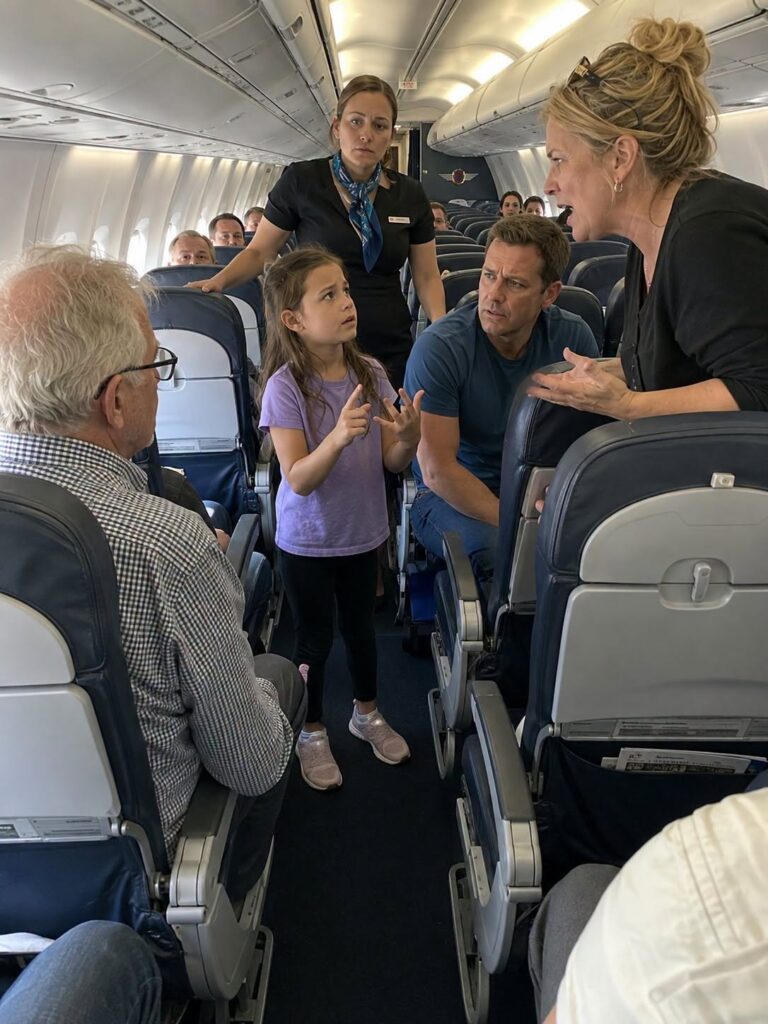
I met my fiancé Marcus’s family for the first time at a holiday dinner, and within about twenty minutes, his mother Diane had decided, without asking, that I was a nurse.
I never actually said that. I’d mentioned working “in surgery” during an earlier introduction, a genuine shorthand I use casually in social settings because “I’m the chief of surgery at a level-one trauma center” tends to derail small talk in ways I don’t always want at a dinner party. Diane apparently filled in the rest of the sentence herself, and the assumption solidified fast enough that correcting it felt, in the moment, like more effort than the conversation warranted.
What actually bothered me wasn’t the assumption itself. Nurses do essential, demanding, highly skilled work, and if I had been a nurse, none of what follows would have been remotely acceptable either. What bothered me was the specific way Diane’s tone shifted once she’d decided, internally, what my job was — a subtle but unmistakable recalibration of how much my opinions in the conversation apparently mattered.
She talked over me twice during a discussion about healthcare policy, redirecting to Marcus’s uncle, an internist, for “the actual medical perspective,” despite my having said something directly relevant moments earlier. She asked, at one point, whether I “got queasy” during procedures, a question with an edge to it that felt less like genuine curiosity and more like a gentle, condescending test. She spent a long stretch of the evening explaining basic anatomy to me, unprompted, in the tone of someone informing a layperson, apparently confident I needed the refresher.
I let most of it go that first dinner, partly because first impressions with future in-laws felt like the wrong occasion for a correction, partly because I was genuinely curious how long the assumption would run before someone actually asked me a direct question about my work.
It ran for three full months.
The correction, when it finally happened, wasn’t dramatic or intentional on my part. Marcus’s cousin, planning her own wedding, mentioned needing a recommendation for an orthopedic surgeon for her father’s upcoming hip replacement, and I offered, casually, to check with a colleague of mine in that department.
“You have colleagues in orthopedics?” Diane asked, genuinely confused.
“I’m the chief of surgery at Cedar Ridge. Orthopedics falls under my department’s coordination for a few shared procedures.”
The table went quiet in the specific way tables go quiet when a assumption three months in the making collapses all at once. Diane’s face moved through several stages — surprise, visible embarrassment, and then something that looked like she was mentally replaying the last three months of conversations through a very different lens.
“I had no idea. You never corrected me.”
“I mentioned working in surgery the first time we met. I think you filled in the rest yourself, and I didn’t feel like it was my job to manage your assumptions about my career for you.”
That last part, I want to be honest, came out sharper than I’d planned, but I didn’t take it back, because it was true and because I’d spent three months watching a family gradually decide my professional opinions mattered less based on an assumption they’d never actually verified.
What followed wasn’t the satisfying vindication scene you might expect from a story like this. Diane apologized, genuinely, but the more important part of the conversation happened a few days later, when Marcus and I talked it through privately.
“I need you to actually hear what I’m about to say,” I told him. “The problem was never that your mom thought I was a nurse. The problem is how she treated someone she believed was a nurse. If I actually had been one, everything she did over those three months would have been just as wrong, and I need your family to understand that distinction, not just feel embarrassed that they underestimated a surgeon specifically.”
Marcus, to his credit, took that seriously rather than getting defensive on his family’s behalf. He had a longer conversation with his mother than I was part of, one that apparently addressed not just the specific mistaken assumption but the underlying instinct that had made a “nurse” label feel, to her, like license to speak over someone and explain basic concepts unprompted.
Diane and I talked properly about a month later, and to her credit, she didn’t lean on “I didn’t know you were a surgeon” as her explanation the way I’d half-expected.
“I’ve thought about this a lot since Marcus and I talked,” she said. “I don’t think I’d have treated an actual nurse with the respect she deserved either, if I’m honest with myself, and that’s a much harder thing to admit than just being embarrassed about guessing your job wrong. I think I had some assumptions about which medical professionals’ opinions carry weight in a conversation, and those assumptions were unfair regardless of what your actual title turned out to be.”
That admission mattered far more to me than the earlier apology had, because it addressed the actual problem rather than the surface-level mistake. I didn’t need Diane to be impressed by my title. I needed her to understand that the way she’d spoken over someone she believed to be “just a nurse” was the real issue — one that a corrected job title happened to expose, but didn’t, on its own, resolve.
Diane and I have a genuinely warm relationship now, three years into my marriage to Marcus. She’s more careful, generally, about assumptions across the board, not just about me specifically, something I’ve noticed in how she talks to service workers and other people whose professions she doesn’t immediately know.
I don’t think the lesson here is “make sure people know your impressive title before they decide how much respect to extend you.” I think the actual lesson, the one that took Diane longer to arrive at than the simple correction did, is that respect shouldn’t have been conditional on a job title in the first place — mine or anyone else’s.