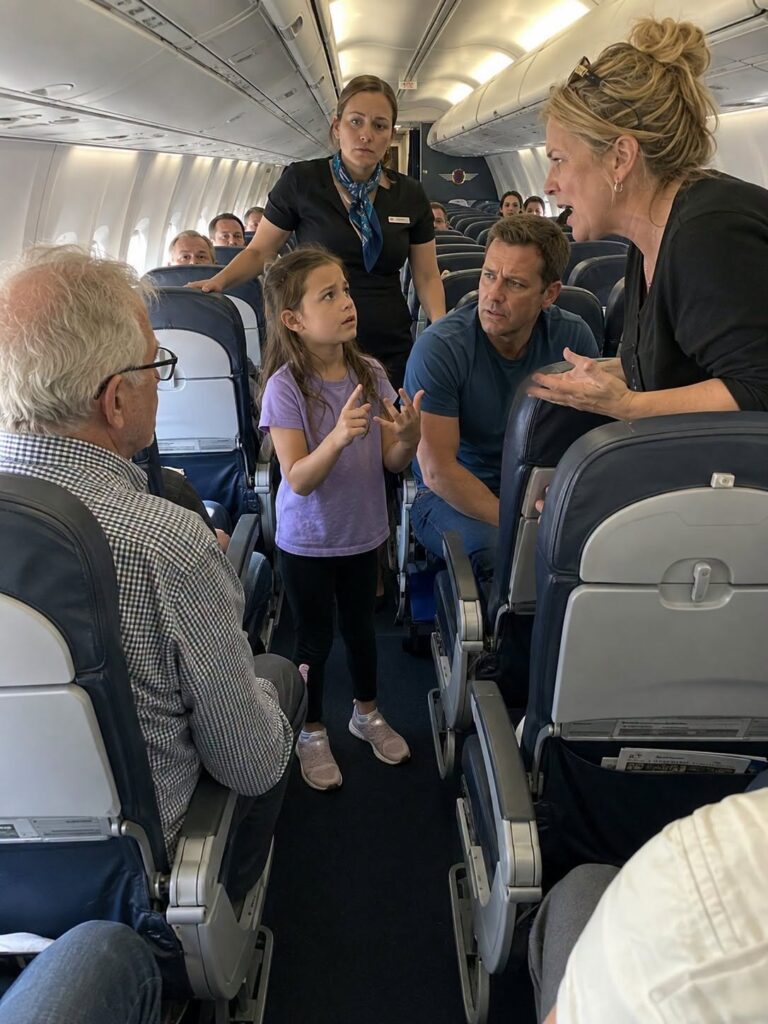
Seven-year-old Oliver’s hand stopped halfway to a slice of birthday cake while twenty relatives kept laughing. Hurtful family jokes were landing on him once again, and nobody at the table knew that a phone call would soon change the whole evening.
Tucked inside his dinosaur backpack was a folded card. It held a secret that no one in the room had guessed.
A Boy Who Loved His Grandmother’s Big Chair
Oliver is the kind of kid who can list more dinosaurs than most adults can list presidents. He also loves soccer and chocolate cake.
Above all, he loved Saturdays at his grandmother Patricia’s house. She kept a large chair by the window, and she would pull him onto her lap there to read dinosaur books until both of them nodded off.
She called him her Teddy Bear, and the name stuck for years. Nobody imagined that hurtful family jokes would one day push that sweet nickname aside.
When Patricia turned 70, Oliver wanted to give her something special. He spent an afternoon at the kitchen table making a birthday card, folded it with care, and zipped it into his backpack. His plan was to hand it over after dessert.
The Birthday Dinner Where Hurtful Family Jokes Began
That Sunday, twenty relatives crowded around Patricia’s table, passing plates and trading stories. Oliver sat between his parents, Sarah and David.
When the cake came out, Oliver leaned toward it and then glanced at his grandmother first, as if asking permission. Sarah figured he was just being polite.
Patricia laughed and told him to slow down because he was getting a little curvy. A few relatives chuckled along, as though hurtful family jokes were simply part of the entertainment.
Oliver went stiff. His arm sank back to his side, and in a voice his mother barely heard, he said he wasn’t fat. Then he pulled his shirt down over his stomach and held it there with both hands.
Patricia laughed even harder and said he looked six months pregnant. Oliver said nothing. He stared at the slice he never touched while his fingers twisted the hem of his shirt.
Sarah stepped in and reminded her mother-in-law that Oliver was only seven. Patricia waved her off and told her to relax, insisting it was all in fun.
One Question That Quieted the Table
David set down his fork. Calmly, he asked his mother if he could ask her one thing.
Then he asked why she kept joking about Oliver’s belly when she knew exactly what the doctor had said. The smile left Patricia’s face, and she told him not to go there.
Most of the relatives had no idea that Oliver had been dealing with stomachaches for three weeks. His pediatrician was worried about the swelling and had ordered tests. Oliver had just had an ultrasound the day before, and the family was still waiting for answers.
Patricia knew all of it. She had even driven them to the first appointment, which made hurtful family jokes from her so hard to understand.
David pointed out that Oliver was already scared and asked why she would add to it. Patricia looked away and didn’t answer.
A Sunday Night Phone Call
Before anyone could speak again, Oliver pushed his chair back and said his tummy hurt. His face had turned pale, and when Sarah asked if it felt like before, he shook his head. It was worse, he said.
Then Sarah’s phone rang, and the pediatrician’s name lit up the screen. A doctor calling on a Sunday evening is rarely good news.
The doctor asked whether Oliver was with her. She explained that the scan had shown something concerning and told Sarah to go straight to the emergency department instead of waiting until morning.
David lifted Oliver into his arms before the call even ended. The room that had been full of laughter a few minutes earlier fell silent, and nobody was laughing at hurtful family jokes anymore.
What the Doctors Found at the Hospital
At the hospital, Oliver kept asking if he had done something wrong. Later he asked why everybody kept staring at his tummy. He pressed both hands against it, like a shield he had learned to raise.
After examining him and reviewing the scan, a doctor asked his parents to step into the hallway. A nurse stayed with Oliver.
The doctor explained that there appeared to be a mass near one of his kidneys. It could explain the swelling and the pain, but more tests and a specialist were needed before anyone could say what it was.
Through the glass, Sarah watched her son lie small and still under a thin blanket. Only hours earlier, hurtful family jokes had drawn laughter from twenty people about the size of his belly, while something serious had been growing inside him all along.
Back in the room, Sarah noticed Oliver tugging his gown over his stomach. When a nurse came to adjust a monitor, he turned away and whispered for her not to look.
Sarah had seen that same movement at the dinner table and in recent photos. She had assumed it was shyness. Now she wondered whether hurtful family jokes had been wearing him down for far longer than one evening.
Why Oliver Never Told Anyone
That night, Sarah sat by the bed and asked Oliver if he remembered Grandma’s big chair. He nodded, then said Grandma didn’t let him sit there anymore. She had told him he was too big for her lap.
He added that Grandma had said his tummy was growing. She no longer called him Teddy Bear, he whispered. Now she called him her big boy.
Sarah told him that none of it was his fault and that hurtful family jokes were never something a child had to earn or fix. She told him he was allowed to say so when a joke stung. Oliver only asked if Grandma would be mad.
The next morning, Sarah asked David how long his mother had been commenting on Oliver’s weight. He admitted it had happened before.
After the first doctor’s visit, he had asked Patricia to stop, and she had promised she would. When the comments returned, he had told Oliver that Grandma loved him and didn’t mean it, and that he shouldn’t take it so seriously. Sarah quietly pointed out that he had asked a seven-year-old to ignore something that made him ashamed of his body.
Later, Oliver finally explained why he had stayed quiet. He had once overheard Patricia crying in the hallway after David asked her to stop, and she had said David didn’t love her anymore.
So Oliver had worked out a chain in his head. If he told Mommy, she would tell Daddy, Daddy would tell Grandma, and Grandma would cry. Hurtful family jokes had taught this little boy to carry his pain alone, so that the adults around him wouldn’t be sad.
The Card in the Dinosaur Backpack
Oliver asked for his backpack so he could hold a small green dinosaur with one eye missing. When David pulled the toy out, a folded yellow card slid onto the floor.
Sarah recognized it immediately. It was the birthday card Oliver had made for Patricia.
On the front was a drawing of Grandma’s chair beside the window, a vase of flowers, and a little boy curled up in her lap. The boy wore the blue dinosaur shirt Oliver had outgrown long ago.
Inside, in uneven handwriting, he had wished his grandmother a happy birthday. He wrote that he wished he could be little again so she could hold him the way she used to, and that he still loved her.
Sarah read it twice. Through the whole dinner, Oliver had been waiting to hand Patricia a picture of the thing he thought he had lost. Instead, hurtful family jokes had turned him into the punchline.
David pressed the card flat and whispered that he had thought his mother was only teasing. Sarah reminded him that Oliver had told him he was hurt.
When Patricia Read the Card
Patricia arrived that afternoon with a bag of clean clothes and Oliver’s favorite crackers. She looked exhausted. When she asked to go in, David asked her to read something first.
She unfolded the card and whispered that it was her old chair, and her Teddy Bear. Then she read the inside and sank into the nearest seat.
David reminded her that she was the one who had told Oliver he was too big, and that she had joked about a pregnant belly at her own party. Patricia insisted it was only a joke and that she loved the boy.
David asked why Oliver believed he had to become smaller to get his grandmother back. For the first time, Patricia had no answer.
She begged to see her grandson. David told her not until Oliver wanted that. Sarah saw the old hesitation cross his face, and then watched him hold firm. For once, the family put a child’s feelings ahead of keeping the peace, even though hurtful family jokes had come from someone they loved.
Later, David sat beside Oliver and apologized for not listening. He explained that grown-ups are allowed to feel sad and that it is never a child’s job to stop it. He asked Oliver to tell him every time something hurt, even if it involved Grandma, and even if it involved David himself.
How Hurtful Family Jokes Weigh on a Child
It is easy to wave off a comment about a child’s body as harmless teasing. Oliver’s story shows how it can land very differently.
Small remarks like hurtful family jokes can teach a child to hide, to shrink, and to protect the adults around him instead of himself. A child often does not have the words to explain that. He may simply stay quiet and pull his shirt a little tighter.
Health experts generally advise families to avoid teasing kids about weight or body shape, even when the tone is light. The Academy of Nutrition and Dietetics offers practical guidance on talking with children about weight and body image that is worth reading.
Rebuilding Trust at a Child’s Pace
The following weeks were hard. Doctors confirmed that Oliver had a serious growth near his kidney and began treatment. Some days he felt too tired to talk, some days he felt scared, and some days he was simply angry about being stuck in a hospital.
Patricia kept sending messages. David answered them, but he no longer promised visits on Oliver’s behalf.
When Oliver felt ready, he agreed to see her, though the memory of hurtful family jokes still sat between them. She came empty-handed and told him she was sorry. She called her jokes a mistake he never deserved and promised she no longer thought he was too big.
He asked whether he was too big for her chair. She told him the chair was never meant to make him feel unwanted, and that he could sit beside her or on her lap, whichever felt right.
Oliver didn’t hug her. He asked if she still had his dinosaur books, and she said she did.
Over the next few months, the visits stayed short. The first time she read to him again, he sat at the far end of the sofa. She didn’t ask for a hug when she finished. She only said she would bring another book if he wanted one, and he asked for the one with the flying dinosaur.
The Slice of Cake That Said Everything
Months after that birthday dinner, the family gathered at home to celebrate a good day after treatment. Oliver sat beside Patricia, showing her a dinosaur he had drawn.
When Sarah set the cake down, Oliver reached for a slice and hesitated, just as he had that night. This time, David noticed right away and simply asked which piece he wanted.
Oliver pointed to the chocolate dinosaur with the biggest head. He took a bite without missing a beat in his story. His shirt stayed where it was, and nobody at the table said a word about his stomach.
What Hurtful Family Jokes Teach Every Family
The biggest lesson here is that a child’s hurt deserves to be believed, even when it comes from someone the whole family adores. Waiting for a child to speak up is not enough. Adults have to notice the small signs and act on them.
If you enjoy real-life stories about family, healing, and second chances, you can find more reading at Sample PDF File.
In the end, this family did not cut Patricia out of Oliver’s life. They put his feelings first and let trust grow back at his pace, until hurtful family jokes gave way to patience, gentle stories, and a little boy who no longer felt he had to hide.