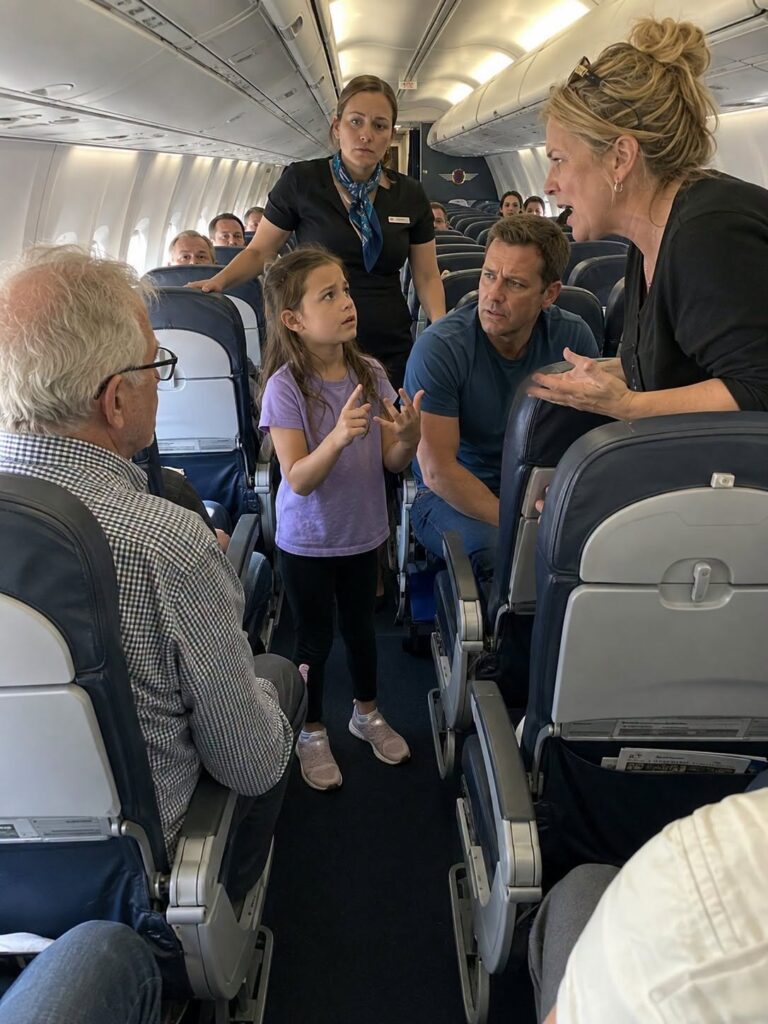
When Lieutenant Colonel Nicole Turner came home on leave to help her injured mother, she expected a family emergency. What she found was small town corruption that had kept an entire community quiet for six years. Her mother’s diner sat at the center of it.
How Small Town Corruption Reached a Family Diner
Evelyn Turner, 75, runs Turner’s Family Diner, which she and her husband Thomas opened 41 years ago. They built it with borrowed money and help from neighbors, and it became a place where struggling families ate for free. Then a young waitress named Kayla Medina recorded a 47-second video of Travis Cain shoving Evelyn to the floor.
Evelyn insisted she had simply fallen. Nicole understood why. Customers stared into their coffee, and a gray pickup sat across the street with its engine running.
This was small town corruption working exactly as designed. People had learned that speaking up cost more than staying silent. The Cain family owned much of the town, and the people paid to protect residents had helped enforce that lesson.
Soon, FBI Special Agent Alicia Moreno arrived with a state investigator. Their team had spent seven months examining property deals tied to Cain Realty, several financial institutions, and local officials. Some witnesses had withdrawn their statements, and one had received threats against his grandchildren.
Kayla stepped forward anyway. She feared for her sixteen-year-old brother, yet she told Moreno she could not keep pretending she had not seen what happened.
Warning Signs Behind a Powerful Family’s Power
Later that day, Sheriff Don Harper stood on the Turner porch with a three-page statement. It declared that Evelyn’s injuries were an accident and that no one connected to Cain Realty was responsible. Her signature line was already typed, and the date was backdated.
Nicole noticed the date and refused to let the paper be signed. As he left, Harper remarked that her father had also been stubborn. Evelyn later said he had used nearly the same words to Thomas three days before Thomas died.
That evening, a retired deputy named Eddie Medina, who was Kayla’s uncle, met Nicole at a neighbor’s kitchen table. He admitted that Harper had ordered him to destroy a report Thomas filed two days before his fatal crash. Eddie had secretly kept a copy, and he had carried the shame ever since.
He also described a radio call from the night of the crash. In his account, the sheriff’s official log placed him elsewhere. Eddie said he was dismissed after contacting state officials, and that someone later ran him off the highway.
His neighbor Carol had quietly collected clippings for five years: fires, foreclosures, and land sold far below its assessed value. Nicole read through them until midnight. The pattern was clear. A family would refuse an offer, then face a sudden county violation, then sell cheaply.
The Recording That Exposed Small Town Corruption
Then Evelyn finally told Nicole what she had hidden for six years. In a toolbox compartment Thomas had built himself, she kept his silver field recorder, a memory card, and a short note. The note asked that Nicole never be allowed to chase these men alone.
A stranger had visited Evelyn after the funeral, she said, and warned that Nicole’s military career could suffer if she asked questions. Evelyn believed him, so she stayed silent to protect her daughter.
Nicole did not play the device. She photographed everything and called Agent Moreno, who sent an evidence technician. Investigators examined the card, and several recordings were readable.
Thomas had once studied surveying. In one recording, he confronted Wade Cain about altered flood maps and soil reports that did not match earlier samples. Another recording captured a confrontation on Route 9 involving Wade, Harper, and Travis, along with a threat aimed at Nicole herself.
Investigators stressed that the files needed independent authentication and corroboration. Nicole listened anyway, and it changed how she understood her father’s death. It had never been a simple accident.
That is how small town corruption often survives. It depends on frightened witnesses, missing paperwork, and official records that quietly change.
The Land Behind the Diner
The reason behind the pressure soon became clear. A plan called the Riverbend Commercial Access Corridor would run an access road for warehouses and freight facilities across dozens of properties. The developer was Cain Holdings, and the only parcel still blocking the route was the strip behind Evelyn’s diner.
Attorney Grace Holloway, who had represented families who lost land to Cain Realty, studied the maps. Records from a county assessor’s employee named Hannah Greer showed assessments and documents that did not match official files. The development map also appeared to conflict with historic drainage surveys.
Thomas had requested those very records weeks before he died. Soon afterward, a document signed by Mayor Linda Brooks told staff to stop providing copies.
Meanwhile, the pressure on Evelyn grew. Suppliers suspended deliveries, an insurer reviewed an anonymous complaint, and four county inspections arrived on the same day. Grace demanded the legal basis for each one, and the inspectors left without closing the diner. It was a small victory against small town corruption, but it mattered.
When a Whole Town Found Its Voice
Public support began to build. Walter Price, a customer for thirty years, privately told Grace he had seen the assault, though his granddaughter’s shop sat in a Cain-owned building. Other customers followed, and Martha Bell shared a carbon copy of a letter Thomas had written to her years earlier.
When the planning board met, Evelyn walked to the microphone in a navy dress. She spoke about the neighbors who helped build the diner and the six years she had spent afraid. The room rose in applause, and the board postponed its vote.
That night, Wade Cain struck back. Kayla vanished after a fake message made it seem as if her brother was in danger near the old mill. Soon, photographs and videos arrived demanding Thomas’s original survey records.
Nicole wanted to drive straight to the mill. Instead, she did what her training had taught her. She stayed put, passed along an old memory of the building’s layout, and cooperated with Moreno’s team during controlled calls.
The state response team reached the building, and Kayla was rescued alive. Wade and Travis were taken into custody. Nicole cried in her mother’s arms, relieved and exhausted.
What Happened to the Men Behind It
The investigation widened quickly. Authorities recovered Thomas’s notebook, filled with measurements and parcel numbers, and a former mechanic named Frank Doyle came forward. He had kept photographs and notes suggesting the steering on Thomas’s truck had been tampered with, and he said Harper had pressured him to change his conclusions.
Harper was arrested while trying to leave the state, and Mayor Brooks was later charged. This was small town corruption dragged into daylight, one document and witness at a time.
Travis eventually agreed to cooperate with prosecutors. Wade, Harper, and Brooks were all convicted and received substantial sentences, though not every allegation ended in a conviction. Evelyn testified plainly and without exaggeration, and Walter admitted why he first stayed silent.
Perhaps the most moving discovery came from Grace. In the state land archive, she found a conservation easement Thomas had recorded shortly before his death, protecting the drainage land behind the diner. He had safeguarded the land long before anyone knew his plan.
Lessons About Small Town Corruption
The aftermath brought real change. A new sheriff was elected, oversight measures were introduced, and some families received compensation. Not every loss could be repaired, since the Miller farmhouse and Martha’s orchard were already gone.
A plaque beside the restored creek now honors Thomas as a neighbor who believed in protecting land, honesty, and community. Kayla found support through counseling and business classes. Her brother Miguel earned a scholarship to study environmental engineering after reading Thomas’s notes.
The story offers a few lessons. First, fear is how small town corruption keeps its grip, and it loosens when people speak together. Second, evidence matters more than anger, and Nicole’s patience made the difference. Third, ordinary citizens must keep watching records and meetings long after one corrupt family falls.
Readers who want to understand how federal investigators approach these cases can explore the FBI’s public corruption resources. For more reading and reference material, you can also visit SamplePDFFile.
In the end, Nicole and Evelyn walked home from the diner without looking over their shoulders. Their story shows that small town corruption can silence a person, a room, even a community for years, but it cannot outlast people who finally decide to tell the truth together.