I saved for four months to buy wheelchair-accessible seats for my son Marcus’s first professional football game, tickets significantly more expensive than standard seating given the limited accessible section and the demand for it, a purchase that genuinely stretched what I could afford but felt entirely worth it watching thirteen-year-old Marcus’s excitement build for weeks beforehand.
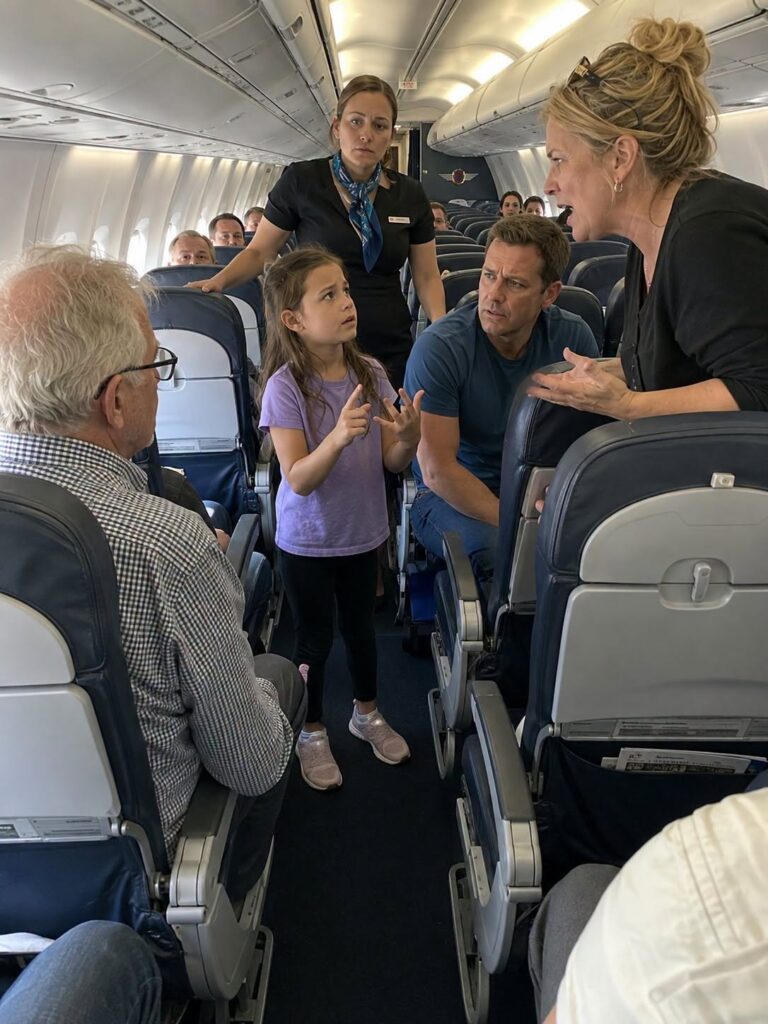
We arrived at our section forty-five minutes before kickoff, plenty of time to get Marcus settled comfortably, and found a family of four already occupying our specific wheelchair-accessible spots, blankets and snacks spread out in a way that made clear they’d been there a while.
I want to be honest about the specific, sinking dread that hit me in that moment — not just the practical problem of displaced seating, but a familiar, exhausting anticipation of having to advocate, yet again, for space that had been specifically designed and priced for exactly Marcus’s needs, space that somehow still required defending even when properly purchased and paid for.
“I think you might be in our seats,” I said, showing the family my ticket confirmation. “This section is wheelchair accessible, and we specifically need the space for my son’s chair.”
The father of the other family looked at his own tickets, genuine confusion crossing his face rather than the defensiveness I’d braced for. “Wait, these say the same section and row. I don’t understand how we’d both have tickets to the same seats.”
We compared our tickets directly, and the confusion resolved into something that wasn’t either family’s fault: a venue ticketing error, apparently affecting a small block of accessible seating that had been sold twice due to a system glitch during a recent seating chart update, a problem neither of us could have anticipated or prevented on our own.
I flagged down a stadium usher immediately, worried we were about to have a stressful, drawn-out dispute with kickoff rapidly approaching, but the usher, once she understood the situation, moved with a speed and competence that genuinely surprised me.
“This has happened twice today already, unfortunately. There was an error in our accessible seating system during a software update this week. Let me get our accessibility coordinator over here immediately, and I promise we’ll get this resolved properly for both of your families before the game starts.”
The accessibility coordinator, a woman named Denise who arrived within about five minutes, handled the situation with a level of care that turned what could have been a genuinely upsetting afternoon into something closer to reassuring. She confirmed the double-booking error immediately, apologized directly and specifically to both families rather than offering a vague general apology, and worked out a solution on the spot: our family kept the original accessible seats, since Marcus specifically required a wheelchair-accessible spot that the other family, whose need was for a companion seat near an elderly grandmother with more limited mobility but not a wheelchair specifically, could be accommodated in a comparable accessible section on the opposite side of the stadium, upgraded at no additional cost as compensation for the inconvenience.
“I’m so sorry this happened,” Denise told me directly, crouching down to address Marcus at his eye level rather than just talking to me over his head, a small gesture that mattered more to me than she probably realized. “You shouldn’t have to deal with this kind of mix-up on what I understand is your first game here. Let me make sure the rest of your afternoon actually goes the way it should.”
She personally walked us to our confirmed spots, checked in twice more during the first quarter to make sure everything was working properly, and comped a round of stadium food for our family as an additional gesture of goodwill that Marcus, thirteen and delighted by the unexpected snacks, appreciated considerably more than the adults’ more complicated feelings about the whole mix-up.
The other family, for their part, couldn’t have been more gracious about the situation either, the father actually apologizing to us again before heading to their new seats, genuinely concerned that the mix-up might have soured Marcus’s first game experience even though it clearly wasn’t anything either family had caused.
What struck me most about the whole afternoon, once the initial dread had resolved into a genuinely well-handled situation, was how differently it could have gone with a less competent, less caring response from stadium staff — how a purely bureaucratic double-booking error could have easily curdled into exactly the kind of exhausting accessibility battle that Marcus and I have unfortunately experienced in other settings over the years, one where properly purchased accessible accommodations get treated as negotiable rather than as the specific, necessary requirement they actually are.
Marcus’s team won that day, in what turned into a genuinely great afternoon once the seating confusion resolved, and he’s talked about the game more in terms of the touchdown he watched from perfect sightlines than the brief mix-up at the start, a testament, I think, to how quickly and competently Denise and the ushers handled a genuinely stressful situation before it could define the day.
I wrote a detailed, specific letter to the stadium’s management afterward — not a complaint exactly, but a clear account of both what had gone wrong with their ticketing system and, more importantly, how well Denise and her team had handled the actual human impact of that error once it occurred. I got a personal response back within a week, along with confirmation that the software issue had been identified and corrected system-wide.
I think about that afternoon now less as a story about a mistake and more as a story about what genuinely good accessibility training and staff empowerment actually looks like in practice — not a perfect system that never makes an error, because systems do make errors, but a team equipped and trusted to resolve those errors with real speed, real dignity, and real attention to the specific person standing in front of them rather than a generic apology and a shrug.